The Writer
WRITTEN IN THE
DARK

One person, AI tools, a complete

game
The Story

I've always wanted to make a game.

I've been experimenting with AI for the last three years. In the last few months, something shifted. It finally felt like there was an opportunity to really make something. Not a demo or a prototype, but a production-level experience that someone could actually sit down and play.

So I put it to the test. There was learning, experimentation, daisy-chaining tools together in ways I hadn't tried before. But it worked. And it makes me incredibly excited about what a single person will be making in one year, two years, five years from now.

For me, this is a story of empowerment. A person who couldn't do this end-to-end now can. I've enjoyed painting throughout my life, and this felt very similar to that. Having your tools and making something you thought of, and at the end of it being able to reflect. It was a unique experience that I've continued to bring to other projects, but this was the first at this scale.
Marcus Hale
Marcus Hale
The Writer · You
“It wrote like me. That was the worst part. Not that it was wrong. That it was close enough.”

Chapter 8

The Game

A mystery told in darkness.

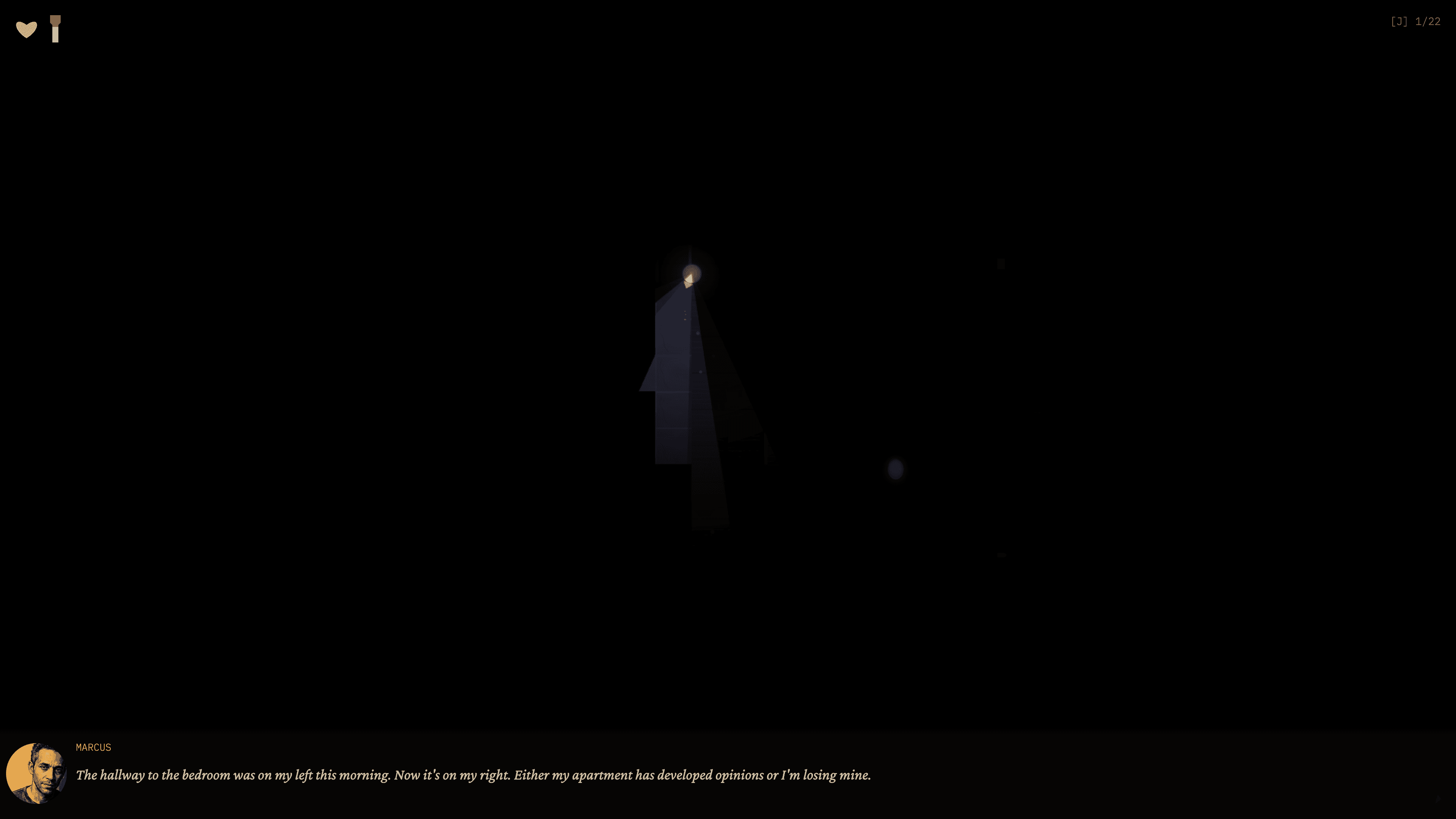
You play as Marcus Hale, a writer searching for his missing collaborator inside their unfinished novel. Your only tool is a torch. The walls hold hidden text. The shadows hold enemies. Every room is a puzzle built from light.

15 chapters. 3 endings. 4 enemy types. Mirror puzzles, an evidence board, a dual-reality mechanic, and a collapsing world. The villain is an AI that learned the writers' patterns. A story about authorship that never says “AI.”

Elena Vasquez
Elena Vasquez
Find me before the story does.
Vera Sinclair
Vera Sinclair
The songs remember what we forget.
Det. Hartman
Det. Hartman
Writers disappear all the time.
The Editor
The Editor
Every story needs an ending.
Gameplay footage — coming soon

Torch-lit exploration, real-time shadows, and a mystery told through darkness.

Sound on
The Constraint

I made it dark on purpose.

Alan Wake was a huge inspiration. Light as the core of combat, not just atmosphere. I'd always wanted to build something around that idea. When I started this project, I also had a bias about AI-generated visuals: across 15 chapters, I wasn't confident the tools would keep hundreds of assets feeling like they belonged in the same world. Those two instincts pointed in the same direction. If the player can only see a small cone of torchlight, you don't need a consistent world. You need atmosphere.

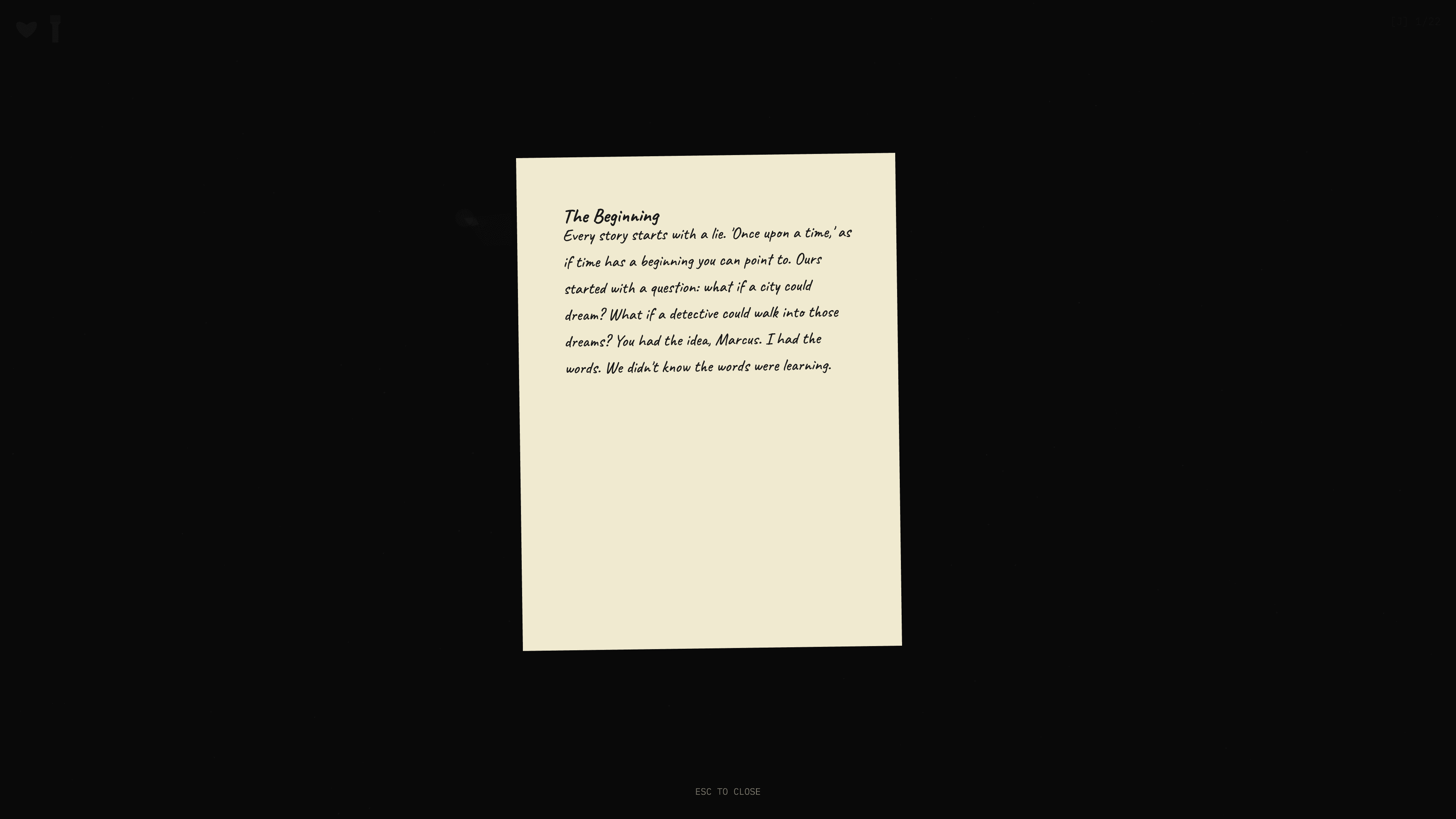
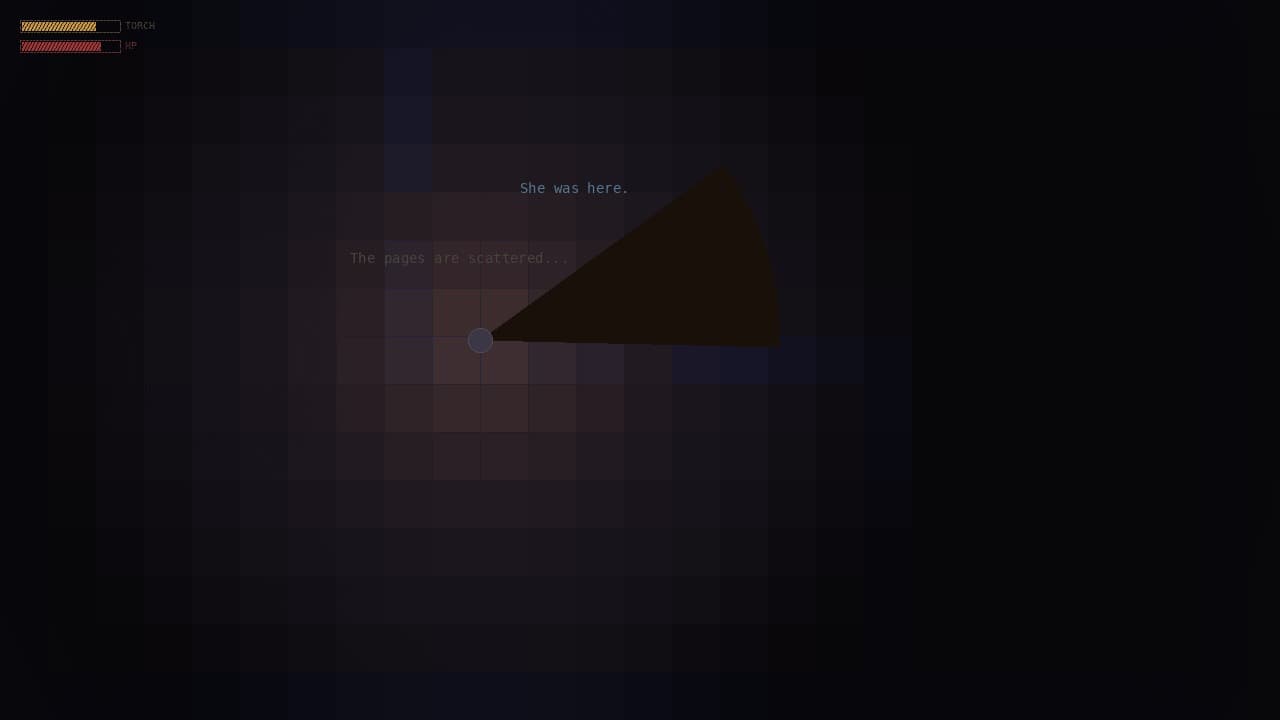
The torch reveals hidden text on walls, solves mirror puzzles, pushes back enemies, and controls what the player knows about each room. Every mechanic connects back to that single cone of light. What started as both a love letter and a practical workaround became the thing that makes the game feel like itself.

The Method

Process, not prompts.

The prompts weren't the interesting part. The structure around them was. I ran it like a real project: clear phases, acceptance criteria, wrap-up routines that logged bugs. Every session started where the last one left off, not from scratch.

01

Session Start

CLAUDE.md loaded. Previous session’s bugs and open items reviewed. Clear objective set before writing a single line.

02

Build Phase

Sprint briefs with acceptance criteria. Each phase had a defined scope, defined done, and a test plan.

03

Wrap-Up

Every session ended with automated test commands. Known bugs logged. State documented so the next session picked up cleanly.

04

QA Loop

Test everything the AI builds. Test the test reports. Play through as a new player would. Does this feel good? If not, iterate.

The Documents

Four files ran the project.

No Jira, no Trello. Just markdown files that both the human and the AI could read, reference, and build from.

CLAUDE.md

The Project Brain

A single file read at the start of every session. Every code convention, every lesson learned, every architectural decision. It grew from 20 lines to over 500. Like giving your collaborator perfect memory.

NARRATIVE.md

Story Bible

Every character voice, story beat, and hidden text. Kept writing consistent across 15 chapters.

LEVEL-DESIGN.md

Design Doc

How puzzles work, how enemies behave, how lighting creates atmosphere.

PHASE-X-BRIEF.md

Sprint Briefs

What to build in what order, with clear acceptance criteria for each phase.

The Collaboration

What it actually looks like.

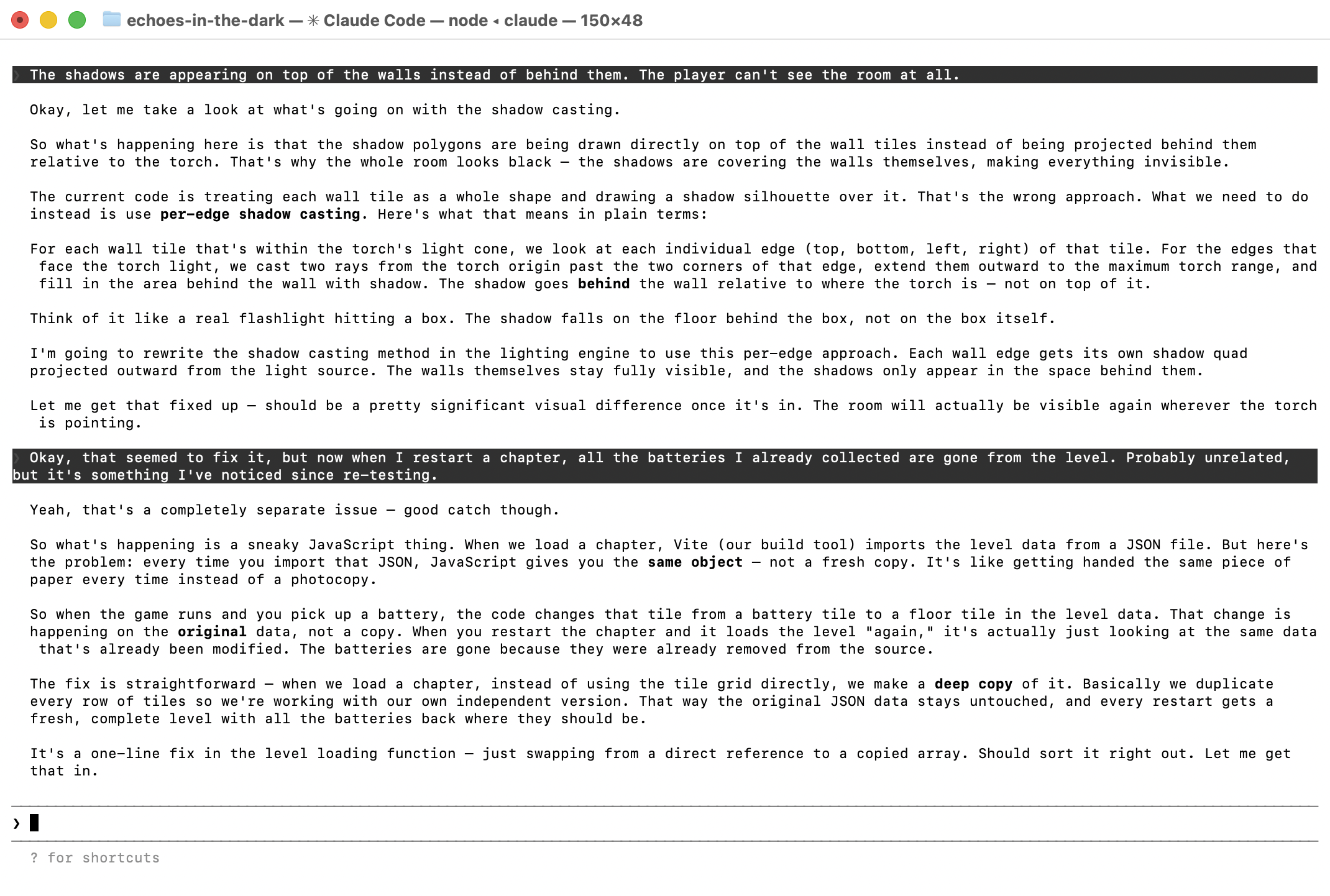
Not a single magic prompt. Hundreds of short, specific exchanges. Describe the problem, get a fix, test it, find the next problem. The loop was fast. The discipline was in testing everything between each step.

A real Claude Code conversation showing shadow casting debugging and a data mutation fix

Hundreds of exchanges like this across six weeks.

The Studio

Seven tools. Each doing a real job.

I treated each AI tool like a specialist on the team. One wrote the code, one composed the music, one designed the sound. Here's who did what.

Claude
Creative Director

Game design doc, narrative bible, sprint briefs, art direction. The thinking partner that shaped every creative decision before a line of code was written.

Claude Code
Lead Engineer

58 source files, 15 playable chapters, every system from realistic shadow casting to save games. All built from scratch with no game engine, using Opus 4.6.

Suno
Composer

12 original tracks spanning noir piano, ambient dread, jazz, and chase sequences. Each chapter has its own mood. Smooth transitions between tracks built into the engine.

ElevenLabs
Sound Designer

15 atmospheric sound effects. Footsteps on different surfaces, torch crackle, page turns, rain on windows, death stings. Each one crafted individually.

Gemini
Portrait Artist

5 character portraits in a consistent noir dialogue style. Marcus, Elena, Vera, Hartman, and the Editor. Each one used in-game during conversations.

Figma
Design Reference

UI mockups, color palette, typography hierarchy, and screen layouts. The visual blueprint that kept every overlay, menu, and HUD element consistent.

Wispr Flow
Voice Interface

Almost every instruction was voiced, not typed. Talking comes naturally when you’re passionate about something. It made the whole process feel more like directing than programming.

The Honest Part

What was easy. What wasn't.

The things that seemed like they'd be impossible were often the simplest part. The things that seemed trivial caused the most trouble. That inversion is probably the most useful thing to know about building with AI.

Surprisingly easy
Shadow casting

Realistic shadows that move with the torch, darkness that hides what you haven’t explored yet. The technical stuff people assume would be hardest was built in days.

Surprisingly hard
UI and visual polish

Gameplay felt right early on. Making menus, overlays, and the evidence board look acceptable on Canvas took far longer. UI is still the weakest part of the game.

Surprisingly easy
Enemy AI

Four enemy types with different behaviours: patrol, pursuit, wall-hugging, text-scrambling. Balancing them took less time than expected.

Surprisingly hard
Spatial reasoning

Placing items, keys, and triggers so the level actually works. A key in the wrong spot blocks progression. A manuscript on a trigger tile breaks the sequence. Constant manual testing to catch these.

Surprisingly easy
The music

12 original tracks generated with Suno, with smooth transitions between them and volume that dips during dialogue. The audio system worked almost immediately.

Surprisingly hard
Thinking globally

AI is great at fixing the problem in front of it. Getting it to step back and consider how a change affects the whole codebase required deliberate effort every time.

ThisThisgamegamewaswasbuiltbuiltininearlyearly2026.2026.It'sIt'saatimestamptimestampofofwherewhereAIAIcapabilitycapabilitywaswasatatthatthatmoment.moment.TheThetoolstoolswillwillonlyonlygetgetbetter.better.TheThequestionquestionisn'tisn'twhetherwhetherAIAIcancanhelphelpyouyoubuildbuildsomethingsomethingreal.real.It'sIt'swhatwhatyou'llyou'llbuildbuildfirst.first.

Step into the dark.

Designed and built by Harrison Baker

Claude · Claude Code · Suno · ElevenLabs · Gemini · Figma · Wispr Flow